

How Much Water Should an Elderly Person Drink?
What does a lack of water in the body lead to? Why does a lack of fluid negatively affect health?
The answer to the simple question «how much water should an elderly person drink» is not as simple as it seems. Only an attentive and thoughtful doctor who works extensively with older people can answer it competently and accurately.
Few people know that an elderly person generally drinks less than a middle-aged person. Why does this happen? First, due to dementia and age-related changes, the sense of thirst becomes blunted in the elderly. Second, a sedentary lifestyle reduces the need for water.
What does a lack of water in the body lead to?
Urine becomes more concentrated — consequently, the risk of stone formation increases. I would put it this way: first microcrystals form, then grains of sand, then larger grains, and finally stones.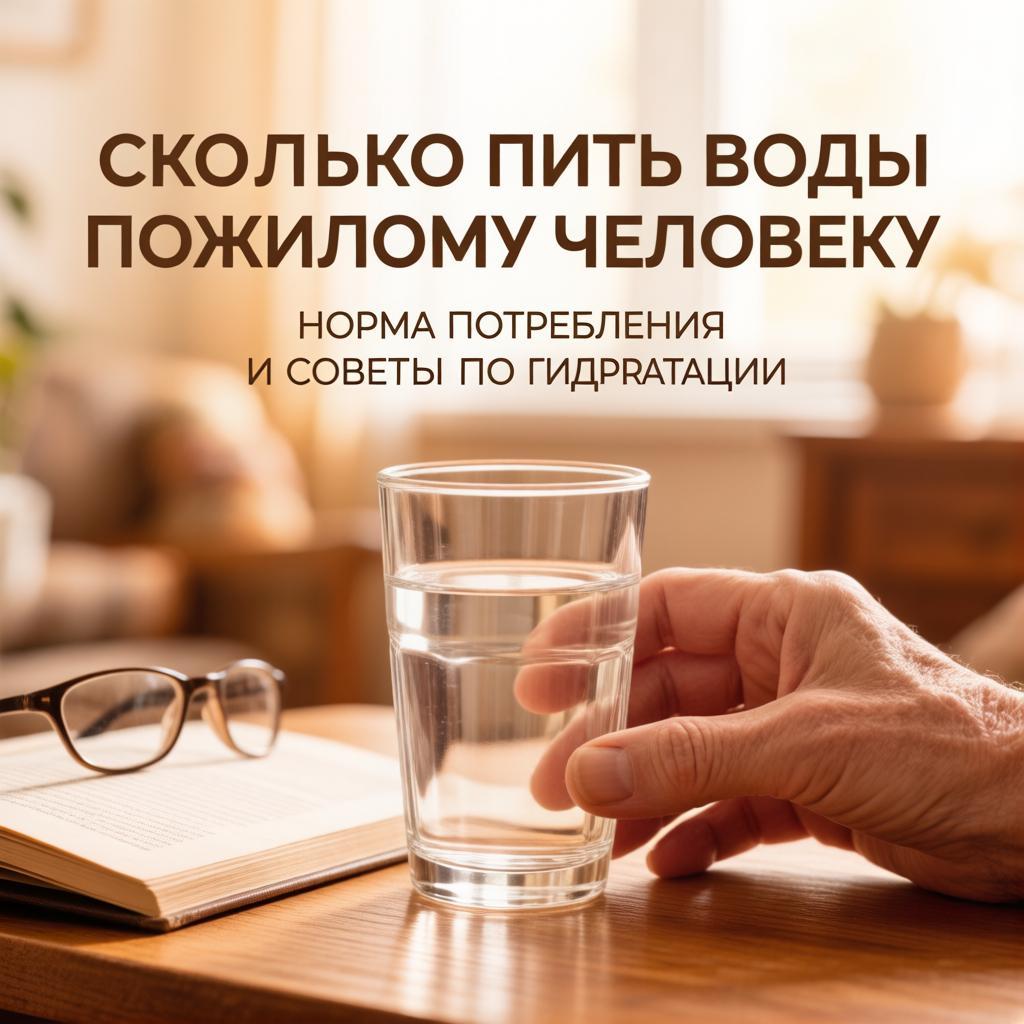 Here also lie such unpleasant issues as the smell of urine and the smell of senile sweat. It is no secret that an elderly person is less tidy and will inevitably drop a few drops of urine into their underwear. Hence the well-known smell in an elderly person’s room.
Bile becomes more viscous. Again, the risk of gallstones increases. There is a tendency to spasms of the bile ducts due to increased bile viscosity. Therefore, elderly people often complain of nagging abdominal pain, in the right hypochondrium of an indefinite nature, which doctors interpret as chronic cholecystitis.
Enzymes secreted by the pancreas also become more viscous and move less well through the ducts. This also leads to spasms of the pancreatic ducts. The result is again indefinite pain in the upper abdomen, which doctors interpret either as chronic pancreatitis or cholecystopancreatitis.
The body absorbs from the intestines as much water as it needs for normal functioning. A lack of water in the intestines leads to stool becoming much thicker than it should be. The intestines have difficulty pushing thick stool. Here is the cause of constipation in the elderly. Here is the cause of fecal stones. Here is the reason why laxatives are useless.
This topic can be continued endlessly. Blood becomes more viscous. Blood supply worsens in those organs and systems where it was already reduced. I cannot fail to mention the brain, which is 90% water. It will also experience a fluid deficit.
So here we are, approaching the question: how much water should an elderly person drink?
You are, of course, expecting figures in litres and grams from me. But alas. There are fairly clear calculations by intensive care specialists, aimed at middle-aged people of average build. They state that the daily fluid requirement is 2–2.5 litres.
To force that much into an elderly grandmother weighing 45 kilograms is both impossible and inadvisable.
What criteria and advice are there?
Always keep a bottle of water on the bedside table. But don’t be naive — he will not drink more on his own. Every time you enter the room, give him water yourself or make him drink.
Look at his tongue more often. It should be moist. The saliva on it should be light, not thick.
A very good and clear criterion: daytime urine should be light, almost transparent — unlike nighttime urine, which has a rich yellow colour. For this, you don’t need to look at the urine every day. It is enough to observe for a few days to understand how much water should be given to the elderly person additionally, and then stick to that amount.
Moles Are Dangerous.
Keywords (English):
water for elderly, dehydration in elderly, how much water to drink, elderly hydration, kidney stones, gallstones, constipation in elderly, thick blood, thirst in elderly, dementia and thirst, urine colour, tongue moisture, caregiver tips, fluid intake elderly
